
Moisture and Odor Control Through Proper Ventilation
Exhaust Fan Installation & Repair Services in San Tan Valley for bathrooms and kitchens where humidity and cooking odors linger
Bathrooms without functioning exhaust fans trap shower steam against ceilings and walls, creating conditions where mold grows on grout lines and paint begins peeling from moisture saturation. Kitchen ventilation removes grease-laden air and combustion byproducts before they settle on cabinets or circulate into living spaces, protecting indoor air quality and reducing cleaning requirements. AZ A/C and Heat Services installs code-compliant exhaust fans sized to the room's cubic footage and repairs malfunctioning units that no longer move adequate airflow due to motor failure or duct blockages.
Exhaust fan installation involves mounting the housing between ceiling joists, running dedicated ductwork to an exterior termination point, and wiring the unit to existing electrical circuits or installing new switches for independent control. Duct runs must slope toward the exterior to prevent condensation from draining back into the fan housing, and exterior vent caps require dampers that close when the fan isn't operating to prevent backdrafts.
Schedule a ventilation assessment to determine proper fan sizing and identify the most practical duct routing for your home's layout..
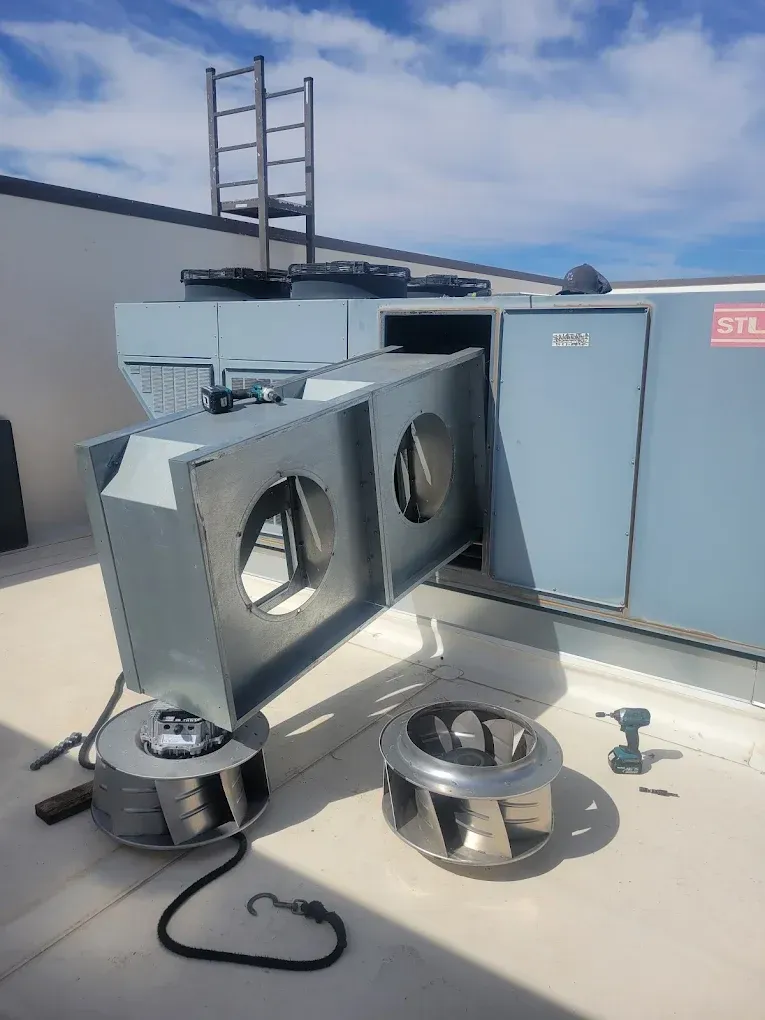
How Exhaust Systems Address Moisture and Air Quality
Properly sized exhaust fans exchange bathroom air completely within the time it takes to finish a shower, measured in cubic feet per minute based on room dimensions. Kitchen range hoods must match the BTU output of the cooktop, with higher-capacity fans required for gas ranges that produce more combustion moisture and particulates than electric units. Undersized fans run continuously without effectively clearing steam or odors, while oversized units can create negative pressure that interferes with water heater venting in homes without adequate makeup air.
Once a properly functioning exhaust fan is installed, bathroom mirrors clear faster after showers and moisture no longer lingers on tile surfaces long enough to encourage mold growth. Kitchen odors from cooking dissipate within minutes instead of spreading throughout the home, and grease accumulation on surrounding surfaces decreases noticeably. The fan operates quietly enough for regular use rather than being avoided due to excessive noise from worn bearings or unbalanced blades.
Repairs often involve replacing motors that have failed from bearing wear or moisture damage, clearing duct blockages caused by lint accumulation or pest nesting, and tightening loose mounting hardware that causes vibration noise. Older units may lack adequate airflow capacity for current code requirements and benefit from replacement rather than continued repair.
What Property Owners Usually Ask
Questions about exhaust fan selection, installation requirements, and performance expectations help property owners understand what proper ventilation involves and what improvements to expect.
What fan capacity does a bathroom require?
Building codes typically specify one CFM per square foot of floor area, with a minimum of fifty CFM for standard bathrooms. Larger master bathrooms or those with separate shower and tub enclosures may require higher-capacity fans or multiple units to achieve adequate air exchange rates.
How does duct routing affect fan performance?
Short, straight duct runs with minimal bends provide the least resistance to airflow, allowing fans to operate at rated capacity. Each ninety-degree elbow reduces effective airflow by approximately ten percent, and flexible duct creates more resistance than rigid metal ducting.
What causes exhaust fans to become noisy over time?
Dust accumulation on blower wheels creates imbalance that produces vibration, and motor bearings wear from continuous operation in humid environments. Loose mounting brackets allow the housing to vibrate against ceiling joists, amplifying operational noise throughout the room.
When should kitchen range hoods vent outside versus recirculating?
Exterior venting removes moisture, heat, and combustion byproducts completely from the home, while recirculating models filter air through charcoal before returning it to the kitchen. Recirculating units don't address humidity or heat and require regular filter replacement to maintain effectiveness against odors.
How do San Tan Valley building codes affect exhaust fan installation?
New construction and major renovations require fans rated for specific airflow capacities, and duct terminations must meet clearance requirements from windows, doors, and property lines. Energy-efficient models may qualify for utility rebates when installed during home upgrades.
AZ A/C and Heat Services provides code-compliant installations with proper duct sizing and exterior termination placement. Contact us to review your ventilation needs and discuss fan options suited to your specific application.