Systems Designed for Business Operation Demands
Commercial HVAC Services in San Tan Valley for facilities requiring multi-zone climate control and continuous reliability
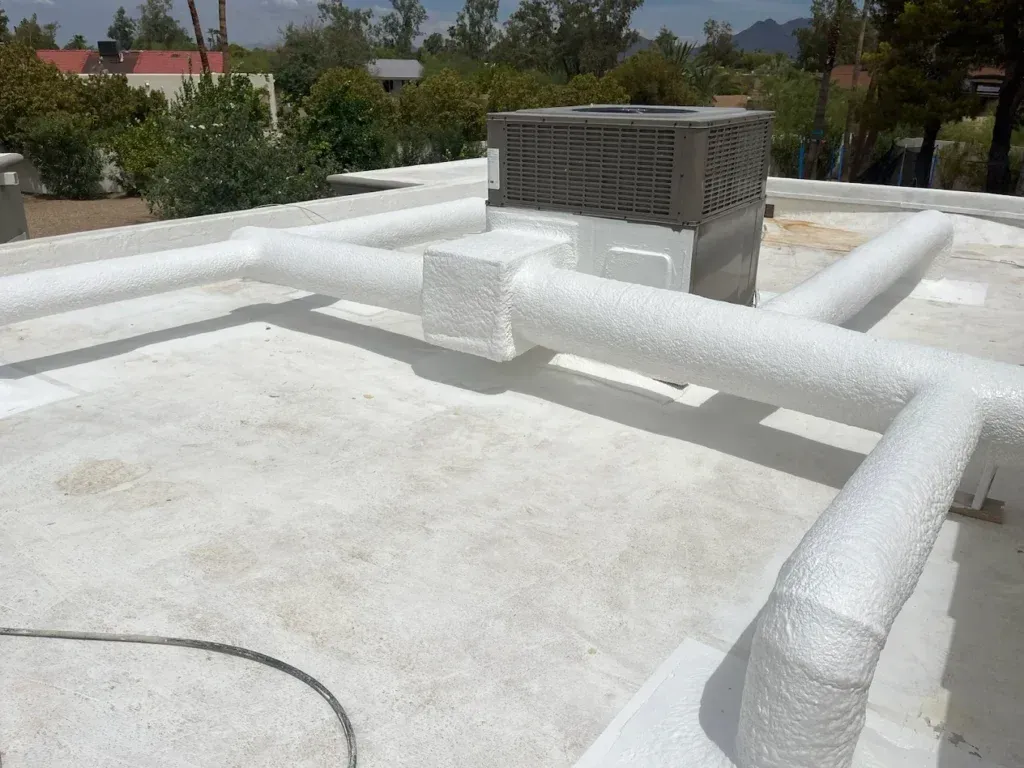
AZ A/C and Heat Services installs and maintains large-scale HVAC systems designed to handle the simultaneous cooling and heating demands of commercial buildings in San Tan Valley. Business facilities often require different temperature zones for server rooms, office spaces, and customer areas, all operating under one coordinated system. These installations involve rooftop units, advanced control panels, and energy management integration that residential systems don't require.
Commercial HVAC work involves system design that accounts for occupancy loads, ventilation requirements for business operations, and equipment placement that doesn't interfere with daily activities. Multi-zone configuration allows different areas of a building to maintain separate temperature settings, reducing energy waste in unoccupied sections while keeping critical areas climate-controlled. The system's capacity must match both current usage and projected expansion needs.
Schedule a facility assessment to evaluate your building's heating and cooling requirements and existing infrastructure capacity.
What Ongoing Service Contracts Provide
Commercial systems require scheduled maintenance that goes beyond filter changes and coil cleaning. Energy management solutions track consumption patterns and identify inefficiencies in real time, allowing adjustments before utility costs escalate. Rooftop units face direct sun exposure and monsoon weather conditions in San Tan Valley, accelerating wear on compressor components and control boards that indoor systems avoid.
After a maintenance program is in place, facility managers notice fewer emergency service calls during peak business hours and more predictable operating costs throughout the year. Equipment that receives quarterly inspections and calibration typically maintains manufacturer efficiency ratings longer than units serviced only when breakdowns occur. Temperature consistency across zones improves, and complaints about hot or cold spots in the building decrease.
Service contracts also include priority response during system failures, which matters when a breakdown affects customer comfort or product storage. Preventive maintenance visits document system performance over time, creating a service history that helps predict component replacement timelines and budget for capital improvements.
What Businesses Ask About Commercial HVAC
Commercial equipment operates differently than residential systems, and facility managers often have specific questions about service expectations and system design before committing to installation or contracts.
What determines the size and capacity of a commercial HVAC system?
The calculation includes square footage, ceiling height, insulation quality, window exposure, occupancy levels, and heat-generating equipment like kitchen appliances or server racks. Undersized systems run continuously without reaching set temperatures, while oversized units cycle too frequently and fail to decontrol humidity properly.
How does multi-zone configuration reduce energy costs?
Each zone operates independently based on occupancy and use patterns, so unoccupied conference rooms or storage areas don't receive the same conditioning as active workspaces. Programmable controls adjust temperatures during off-hours automatically, and zone dampers redirect airflow only where needed.
What does a commercial maintenance program include?
Quarterly inspections cover refrigerant levels, electrical connections, blower motor function, condensate drain clearing, and control system calibration. Belts, filters, and bearings are checked for wear, and rooftop units receive weatherproofing inspections after monsoon season in San Tan Valley.
When should businesses schedule HVAC installations or upgrades?
Off-season scheduling between November and February allows work to proceed without affecting peak cooling demands, and equipment availability is typically better outside the summer rush. New construction timelines require coordination with electrical and structural contractors before rooftop units can be positioned.
How do energy management systems reduce operating costs?
These systems monitor real-time energy use, adjust output based on actual demand rather than constant full-capacity operation, and generate reports that identify inefficiencies or equipment malfunctions before they escalate into costly failures.
AZ A/C and Heat Services provides detailed proposals that outline equipment specifications, installation timelines, and maintenance intervals tailored to your facility's operational schedule. Request a system evaluation to review your current equipment performance and explore efficiency upgrades.