Restoring Climate Control When Systems Fail
24/7 Emergency HVAC Repair Services in San Tan Valley for sudden breakdowns during extreme weather
Compressors seize without warning, capacitors fail during high-demand startup cycles, and refrigerant lines develop leaks that drain charge overnight, leaving homes and businesses without cooling when outdoor temperatures climb past 110 degrees and indoor conditions become unsafe within hours. Around-the-clock emergency response matters in Arizona, where HVAC failure during summer heat isn't an inconvenience but a safety concern for vulnerable occupants and a business disruption for commercial clients who can't operate in uncontrolled temperatures. AZ A/C and Heat Services provides fast diagnostics and on-site repairs for heating and cooling emergencies, with technicians dispatched immediately to address failures that can't wait until regular business hours.
Emergency repairs involve rapid assessment of what failed, whether the problem requires part replacement or can be temporarily resolved to restore cooling, and completion of repairs with parts carried in service vehicles or sourced from suppliers with emergency inventory. Priority service during extreme weather means calls are answered promptly and technicians arrive prepared to handle common failure modes like capacitor burnout, contactor welding, and refrigerant loss.
Call immediately when your system stops cooling or heating to arrange emergency diagnostic service..
How Emergency Diagnostics Work
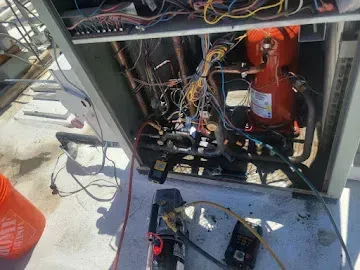
Technicians test electrical supply to the outdoor unit, measure voltage at the compressor and fan motor, check capacitor values with meters that reveal whether components still hold charge, and assess refrigerant pressure to determine if the system has adequate charge or has leaked down. Fast diagnostics eliminate guesswork by following systematic troubleshooting that isolates whether failure occurred in electrical components, mechanical parts, or refrigerant circuit.
Once repairs finish, your system cycles normally, indoor temperatures drop back to comfortable levels, and you regain the climate control that makes buildings livable during desert summers. Emergency part replacement addresses failed capacitors within minutes, damaged contactors in under an hour, and refrigerant leaks once the source is located and sealed, though complex compressor failures may require temporary solutions until replacement parts arrive.
Coverage includes residential properties where families need immediate cooling restoration and commercial facilities where product storage, employee comfort, or operational requirements demand rapid response regardless of when failure occurs. Technicians carry common replacement parts to minimize delays waiting for supplier delivery.
What Property Owners Usually Ask
Emergency situations create stress and uncertainty about response times, repair costs, and whether systems can be restored quickly enough to prevent further problems from prolonged heat exposure.
How quickly do emergency technicians respond?
Response times depend on call volume and technician location, but emergency calls receive priority dispatch with the goal of arriving within two hours for most San Tan Valley locations during peak summer months when HVAC failures spike.
What causes most emergency breakdowns?
Capacitor failure accounts for a significant portion of emergency calls because these components wear from repeated startup cycles and heat exposure, followed by contactor failure, refrigerant leaks, and compressor issues that develop suddenly after years of normal operation.
Can all problems be fixed during an emergency visit?
Most electrical and mechanical failures can be repaired on-site if parts are available, but compressor replacement or extensive refrigerant leak repair may require follow-up appointments once parts are sourced and work can be completed properly rather than rushed.
Are emergency repairs more expensive than scheduled service?
Emergency service typically includes premium rates for after-hours response, but avoiding property damage from prolonged heat exposure, food spoilage, or business closure often justifies the cost compared to waiting until regular hours when conditions may worsen.
When should you call for emergency service versus waiting?
Call immediately if indoor temperatures rise above 85 degrees during summer heat, if you smell burning odors from HVAC equipment, if the system makes loud grinding or squealing noises, or if commercial operations are compromised by climate control failure.
AZ A/C and Heat Services maintains emergency availability every day of the year, including weekends and holidays when other providers may be unavailable. Save our number for immediate response when your heating or cooling system fails unexpectedly.